Tuesday, November 10, 2015

Human Rights / Sustainable Development

Human rights are universal and every person around the world deserve to be treated with dignity and equality. While governments have the duty to protect individuals against human rights abuses, businesses are recognizing their legal, moral and commercial need to get involved.

As stated in the preamble of Universal Declaration of Human Rights, “every individual and every organ of society to promote and respect human right”. Every individual and every organ of society excludes no one, no company, no market, no cyberspace. The Universal Declaration applies to them all.

Gender equality is at the very heart of human rights and United Nations values. Gender equality requires equal enjoyment by women and men of socially-valued goods, opportunities, resources and rewards. It does not mean that women and men have to become the same, but that their rights, responsibilities and opportunities will not depend whether they are male or female. Gender equity is the process of being fair to women and men. Equity is a means; equality is the goal.

Sustainable development encompass the triple bottom line – economic prosperity, environmental quality and social equity. Some of the primary goal of sustainability are:

  • The end of poverty and hunger
  • Better standards of education and healthcare (water quality and better sanitation)
  • To achieve gender equality
  • Sustainable economic growth while promoting jobs and stronger economies
  • The effects of climate change, pollution and other environmental factors that can harm and do harm people’s health, livelihoods and lives.
  • Sustainability to include health of the land, air and sea

I have learned that every human beings should be treated equally. It does not mean that we are all the same. Each of us is different but we also have the common qualities that make us all humans. So each of us should be treated with respect, fairly and dignity; and in return, treat others in the same way. We are all part of the environmental problems. Our consumption generates pollution which leads to poor air quality and acid rain which turn to ozone depletion; sustainable development enable us to become more responsible in our consumption so we will be able to protect our natural resources. Empowering our communities will provide quality education for future generations.
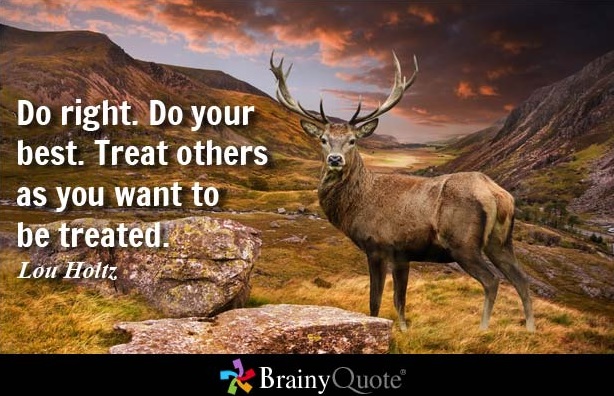
Image Credit: http://www.brainyquote.com/photos/l/louholtz383166.jpg
References:
http://www.ohchr.org/EN/Issues/Women/WRGS/Pages/WRGSIndex.aspx
http://vcampus.uom.ac.mu/soci1101/432_difference_between_gender_equality_and_gender_equity.html
http://www.worldbank.org/depweb/english/sd.html
http://www.environmentalscience.org/sustainability

Monday, November 9, 2015

Group Case: Lamoiyan Corporation – Pedro's Commitment to the hearing impaired

Dr. Cecilio Kwok Pedro is the CEO and President of Lamoiyan Corporation, the company famous for its toothpaste brand “Hapee”.

In 1978, he opened Aluminum Container Inc., a business that relied on orders for aluminum tubes for multinational companies such Colgate – Palmolive and Unilever. For 10 years, Dr. Pedro’s business boomed. However, in early 1986, Dr. Pedro closed ACI when his clients shifted from using aluminum tubes for its packaging, to laminated plastic tubes for packing of its toothpastes. Despite the adversity, Dr. Pedro launched his own toothpaste company, named Lamoiyan Corporation, and the brand Hapee was born.

Dr. Pedro’s belief that corporations should not only focus on making profits but also on having positive impact to society. He prioritized the PWDs and hired hearing impaired individuals and re-hired his previous employees from ACI including the hearing impaired. In its factory, the hearing impaired employees are assigned to labor intensive positions as either line assist employees, machine assist employees, or machine operators, which maximize their technical skills and capabilities; and received the same treatment, trainings/seminars and benefits.

Currently, Lamoiyan Corporation has a number of CSR programs which include Dental Outreach and taking care of the environment. The company launched a series of activities in support of DEAF, Inc. They also produced a video featuring several celebrities expressing their support to the advocacy project.

Image Credit: https://pbs.twimg.com/media/CTCjTVeUsAAUn27.jpg

With this case, it’s good to know that there’s still company who value the PWDs and hearing impaired and they are aiming to hire more as the company expand. PWDs are loyal to the company and they can work in almost every field. Hiring PWDs demonstrates the company’s commitment to a diverse workplace. It send a positive message about the firm and its value to customers, investors, and staff members.

The most important that our group learned in this case, are the relevance of human rights to companies and the role of business in sustainable development. Respecting human rights is the right thing to do. It is in line with core business values such as integrity, respect for people and equal opportunity. Sustainable development requires meeting the basic needs of all and extending to all the opportunity to satisfy their aspirations for a better life.


References:
http://www.gcnetherlands.nl/docs/how_to_business_with_respect_for_human_rights_gcn_netherlands_june2010.pdf
http://www.un-documents.net/ocf-02.htm

Sunday, November 8, 2015

Our Group Service Learning at Word Community Church

Finally, we done our first part of community service in Word Community Church today. It is a blessed and wonderful day for us to spend our time in teaching and sharing our knowledge in the community.

I discussed the importance of planting and taught them how to plant seeds such as garlic and tomato inside their house. What is the importance of planting seeds? First, it can help our economy; second, we can use it in our cooking; and last, we can sell it so we may have additional income.

Also, part of our learning activities is to teach them on how to make graham balls. The ingredients cost is P200 (more or less) and profit of P130 (more or less). They can sell it to have additional income. Why do we need to teach them? We teach them so we may develop the community’s mindset to incorporate savings as part of their habit; create awareness in the community on the importance of savings - why this should be done and how it can be achieved; and inform the community that there are possible ways on how to earn additional and sustainable income.

These are the pictures that I've taken, other members have the other pictures.


After completing the first part of our service learning, it’s a great feeling to serve others. I’ve realized that it’s an honor for me to be part of this activity. In our own little way and without expecting something in return, we make them happy and aware of the value of savings. 

I have learned that social responsibility includes the engagement of each person towards the community where he/she lives which can be expressed as an interest towards what’s happening in the community, as well as in the active participation in solving of some of the local problems.

CSR is not only for companies but it’s also for individual social responsibility. Our conduct defines what kind of person we are, in the eyes of others and no less importantly, in our own. Being social responsible means that people and organizations must behave ethically and with sensitivity toward social, cultural, economic and environmental issues.


“Each of us is a being in himself and a being in society, each of us needs to understand himself and understand others, take care of others and be taken care of himself.”  ~ Haniel Long


Saturday, October 31, 2015

PNOC Energy Development Corporation (Case Study)

Energy Development Corporation (EDC) used to be a subsidiary of Philippine National Oil Company. PNOC EDC is the largest producer of geothermal energy in the Philippines and the second largest in the World. It is involved in geothermal, hydro and wild energy projects. EDC was formerly owned by the Philippine National Oil Company, a state corporation owned by the Republic of the Philippines engaged in the exploration of resources, production of energy and distribution of power supply to smaller electricity distributor. It was privatized and sold to First Philippine Holdings Corporation, a Lopez-owned and controlled corporation involved in energy and power supply generations business.

To give a brief background, a tragic incident happened at dawn of March 26, 2004, a band of about 60 armed extremists seized the company’s P100-million Rig 8 in Barrio Tongonan in Kananga, Leyte demanding ransom payment. PNOC EDC ignored the extremists’ demand, the extremists killed some regular workers who were coming to work. Aquino, who had just president of the company a month before, noticed that there were full of onlookers and just curious at what was going on and no sympathy for the bereaved families. To find out why the townsfolk seemed unconcerned about the tragic incident, Aquino had an informal survey done. The survey showed that residents of the host communities did not relate to PNOC EDC or to its employees. To them the company only exploited the area without giving back anything to the local residents. Local people considered PNOC EDC employees aloof and supercilious.

The issue with the case is that there’s a wall between PNOC EDC and the community. In my opinion, the company should start by opening up the camp to the children of the community and build friendship with them so that the children can tell to their parents.

At the end of the day, I’ve learned that CSR should start from home (within your organization) then going out to the community. The company should practice internal equity such as employee participation in which the employees where updated, to have a better understanding on what’s happening in the plant.

Image Credit: https://s-media-cache-ak0.pinimg.com/236x/3b/68/06/3b6806bd945f70e0eef00ec0e002485e.jpg

Friday, October 30, 2015

Corporate Social Responsibility

What is Corporate Social Responsibility or CSR for short?

Image Credit: http://image.slidesharecdn.com/csrawarenessoverviewin35slides-090930070439-phpapp02/95/csr-awareness-overview-in-35-photos-statements-10-638.jpg?cb=1386476847

To sum up the video (Little Green Bags Corporate Social Responsibility by Prof. Dr. Thomas Beschorner, Director of the Institute for Business Ethics at University of St. Gallen) that was shown to us, First, CSR stands for Corporate Social Responsibility. Second, CSR is based on the question of “good business” for a “good society” – today and tomorrow. Third, Corporate Social Responsibility is not charity; it is about how companies earn their profits, not how they spend them. Fourth, it takes employees integrity and appropriate organization structures to realize CSR. It is a matter of individual and institutional ethics. Fifth, politics continue to play an important role, but in a globalized world the effects of regulation can be limited. Sixth, companies play an increasingly important role. Seventh, “soft laws” are new governance mechanisms based on companies’ self-commitment. Finally, CSR has arrived in business practice. It is necessary to support these development professionally, but also to provide critical perspectives with respect to them. Research on issues of corporate responsibility is still beginning and future developments will be exciting to see. It is unclear whether a good and fair society can be created with the help of companies. But it can’t be created without them. Besides, corporate social responsibility, there’s also consumer responsibility.

Sustainability is the key to CSR. The most recognized and quoted definition of sustainability is, “development that meets the needs of the present without compromising the ability of future generations to meet their needs” as was devised in 1987 by the United Nation World Commission on Environment and Development. Incorporating corporate sustainability into businss makes good business sense and creates unique business value.

The purpose of corporation is not only for profit but should be partners in economic growth. We should not rely on government, we should work together to alleviate the poverty.

Tuesday, October 27, 2015

The Gap Labor Problem (Case Study)

The Gap, Inc. is a chain of retail stores that sell casual apparel, shoes and accessories for men, women, and children. The stores headquartered in San Francisco and operate under a variety of names including: Gap, Banana Republic, Old Navy Clothing Company, GapKids and babyGap. All merchandise sold by the chain is private label. Gap had 1348 well-located stores in the US and Puerto Rico, 72 in Canada, 49 in the United Kingdom, and 3 in France.

Apparel stores like Gap purchased their clothes from manufacturers in the United States and around the world. The Gap contracted with over 500 manufacturers around the world who made the Company’s private-label apparel according to Gap’s specification. Gap purchased about 30 percent of its clothes from manufacturers located in the United States and 70 percent from vendors located in 46 foreign countries.

Among the suppliers from whom the Gap sourced its clothes was one in El Salvador run by Mandarin International, a Taiwanese-owned company. A worker there were was paid approximately 12 cents for assembling a Gap T-shirt which retailed at abount $20 in the United States. Wages at Mandarin plant averaged 56 cents an hour, a level that was claimed to provide only 18 percent of the amount needed to support a family of four.

The issue with the case is that Gap cover up the situation at Mandarin such as long hour of work for 56 cents an hour; violence against union supporters; sexual harassment from supervisors; lack of clean drinking water; not being allowed to use rest rooms; and being forced to sweep the factory grounds under a torrid sun as a punishment.

I think Gap should pay more to their suppliers. Companies like Gap should force their suppliers to provide maximum work place safety, by eliminating job risks, compensation for high risk jobs and full awareness of the hazards of a job to employee.

I’ve learned that the goal of a business should not just for profit. It should also think of its suppliers as well as the employees of their suppliers. At the end of the day, everybody has to do their part. 

Image Credit: http://marketingsocial.esadeblogs.com/files/2014/03/quote-Elvis-Presley-values-are-like-fingerprints-nobodys-are-the-106124.png

Monday, October 26, 2015

Individual in the Organization

What is the relationship between the employer and employees? When the employer hire new employees, he is not only a new member of the workforce, they necessarily develop relationships. A strong relationship can lead greater employee happiness and even increase productivity. Employees’ work is voluntary, as worker we should be honest and not to take bribes. We should also work with reasonable care and skill. While employer has a moral obligation to look out for the welfare of their employees. There should be a real and enduring concern for their employees.

SAS Institute is one of the best companies to work. Our Professor show us the video of SAS Institute. The culture of SAS honors the importance of family work/life balance and enjoyment of workplace. They help their employees as well as the family of their employees by providing resources and educational programs.

How should you know that you have caring organization? Do you feel that you are important? Are you encourage to grow? Can you see yourself balancing, like allowing to have activities to your families? Are you well compensated? Do you have recognition?

The important lesson that I’ve learned is that the most important part of the business are the employees. No business can effectively run without their employees. Employers need to manage their relationship with their employees and they should value them.

Image Credit: http://trackur.trackur.netdna-cdn.com/wp-content/uploads/2013/07/jim-goodnight.png